
Programme 2026
Youth Business Funding Guide — National Youth Development Agency
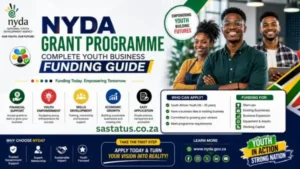
NYDA Grant Programme
Lack of capital is often the biggest barrier for young people in South Africa who want to start a business. To tackle this, the National Youth Development Agency (NYDA) has launched a grant programme that provides direct financial support to young entrepreneurs looking to start or grow their business.
What is the NYDA Grant Program?
NYDA is a South African government agency that was established in 2009 through the merger of the National Youth Commission and the Umsobomvu Youth Fund.The main role of this agency is to create employment opportunities for young people and make it easier for them to become entrepreneurs.The Grant Programme is NYDA’s most popular initiative.Through this programme, eligible young entrepreneurs receive not only financial support, but also non-financial support such as business training, mentorship, and market linkages.
Who is it for
This programme is for young people who are planning to start their own business, or who are already running a small business and want to scale it up.
Why is it not a loan
This money does not have to be repaid. If you meet the requirements and use the grant correctly, it remains a grant. Unlike a bank loan, there is no interest or monthly repayments.
How it helps grow the business
The funding can be used for things like buying equipment, increasing stock, renovating shops, or upgrading technology. This helps the business move to the next level.
How Does the NYDA Grant Work?
Application
Applications can be submitted through the ERP Portal or at the nearest NYDA branch.
Assessment
The applicant’s business idea, documents, and eligibility are reviewed. A credit check is also conducted.
Approval
After a 10-minute pitch presentation, the final decision is made by the Branch Grant Approval and Review Committee (BGARC).
Disbursement
Funds are disbursed within a specified period after approval of the grant.
Monitoring
After the grant is received, NYDA monitors whether the business is operating as intended.
How Much Grant is Available
Minimum Grant
Grants start from R1,000 and are mainly for small and survivalist-type businesses.
Maximum Grant
Up to R200,000 (total/cumulative cap) for standard businesses. For agricultural and technology-based projects, as well as registered cooperatives, the limit can go up to R250,000.
Grant Amount by Business Type
The funding amount depends on the stage of the business, its needs, and the viability assessment. There is no published tier chart; each application is evaluated individually.
Different Support Programmes of NYDA
Grant Programme
Direct financial grant that does not need to be repaid.
Voucher Programme
Vouchers ranging from R6,600 to R19,800 are available for business support services. These can be redeemed through NYDA-approved service providers for services such as marketing plans, compliance, and accounting. A business may receive up to two vouchers.
Business Management Training (BMT)
Free training covering all stages from pre-start to growth. Completion of BMT is mandatory before receiving a grant.
Mentorship Programme
Young entrepreneurs are matched with experienced business mentors who provide guidance during the early stages of business.
Tier-Based Grant Allocation
Tier 1
For new entrepreneurs and individuals who have started a business on a small
- At this stage, CIPC registration is not mandatory.
- The grant funds can be used to purchase basic equipment, raw materials, initial stock, and essential tools required to start the business.
- When applying, you must submit a brief business concept, details of your potential customers, a short plan on how the funds will be spent, and quotations from at least three suppliers.
- At this stage, a personal bank account may be used.
Tier 2
For registered businesses (Pty Ltd or Cooperative) that have already started and have some sales or customers.
- The applicant must be engaged in the business on a full-time basis.
- The grant funds can be used as working capital for upgrading equipment, purchasing stock in bulk, renovating the shop, producing signage, and covering operational expenses.
- A business plan with financial projections, proof of sales or customers, quotations from three suppliers, and a Business Management Training (BMT) certificate are required.
- A business bank account is mandatory.
Tier 3
For established registered businesses that generate regular income and have plans to expand the business.
- Applications with the potential to create employment opportunities will be given priority.
- The grant can be used for purchasing major equipment, opening new branches, procuring stock in bulk, bridging finance, and co-financing.
- Applicants must submit a detailed business plan with 12-month cash flow projections, bank statements, CIPC documents, proof of tax compliance, and a strong business presentation.
- As part of the assessment process, NYDA officials may conduct a site visit to the business.
Tier 4
For registered and operating businesses in the agricultural sector (such as crop farming, livestock, and agro-processing) and the technology sector (such as software, apps, or digital services)
- The grant can be used for agricultural equipment, irrigation systems, processing machinery, technological hardware, software development, and working capital.
- In addition to all Tier 3 documents, applicants must also submit additional sector-specific documents, such as land lease agreements for agriculture or technical documents for technology projects.
- Cooperatives with a minimum of 5 members, all within the specified age limit, may also apply for a grant of up to R250,000 under this tier.
Eligibility & Requirements
Required Documents
Step-By-Step Application Process Through ERP Portal
Registration
Go to the official NYDA website or ERP portal and create an account.
Application Form
Fill out the business details in the application form — clearly state what your business does, how long it has been operating, who your target market is, and exactly how the funding will be used.
Upload Documents
Upload the following documents: your ID, business registration, business plan, and financial statements.
Screening
The NYDA screening team determines whether you are eligible according to basic criteria.
Credit Check
Credit history is checked to determine financial riskiness.
Due Diligence
The NYDA officer verifies that the business is legitimate.
Site Visit
A site visit by the NYDA officer could be requested.
Pitch Presentation
You will be asked to attend a 10-minute pitch presentation. Either face-to-face or via telephone is acceptable. The applicant will have to present financials, business model, and timelines of the business.
Assessment by BGARC
The BGARC assesses your application and decides on its outcome. The decision is binding.
Notification
Notification of the decision regarding approval or rejection of your application.
Contract Signing
In case of approval, you need to sign a contract for disbursement of the funds.
After Approval
Disbursing of Funds
The funds will either be disbursed in one lump sum or as an installment.
Monitoring
The NYDA officers will be monitoring the progress of the business.
Support
If necessary, training and assistance in developing the business will be provided.
What Can the Grant Money NOT Be Used for?
How to Strengthen Your Application?
Important Tips
Before Applying
Before applying, gather all the required documents and complete the BMT.
After Applying
After applying, wait for a call or message from NYDA, and answer their questions honestly.
After Grant Approval
After the grant is approved, follow your mentor’s advice and use the funds only for the approved purposes, so that you remain eligible for future support from NYDA.
Related Post
- SEDFA Support Programmes (SEDA)
- Presidential Youth Employment Intervention (PYEI)
- Funza Lushaka Bursary
- Global Agriculture and Food Security Program
- REIPPPP Renewable Energy IPP
- Section 12B / 12BA Tax Allowances
- EEDSM Programme
- Blended Finance Scheme
- Agro Energy Fund (AEF)
- South African Medical Research Council (SAMRC)
- Comprehensive Agricultural Support Programme (CASP)
- Ilima/Letsema Programme
- National Research Foundation (NRF)
- National Student Financial Aid Scheme (NSFAS)